
Article · February 2, 2025
Choosing the Right Decking: Composite vs. Wood
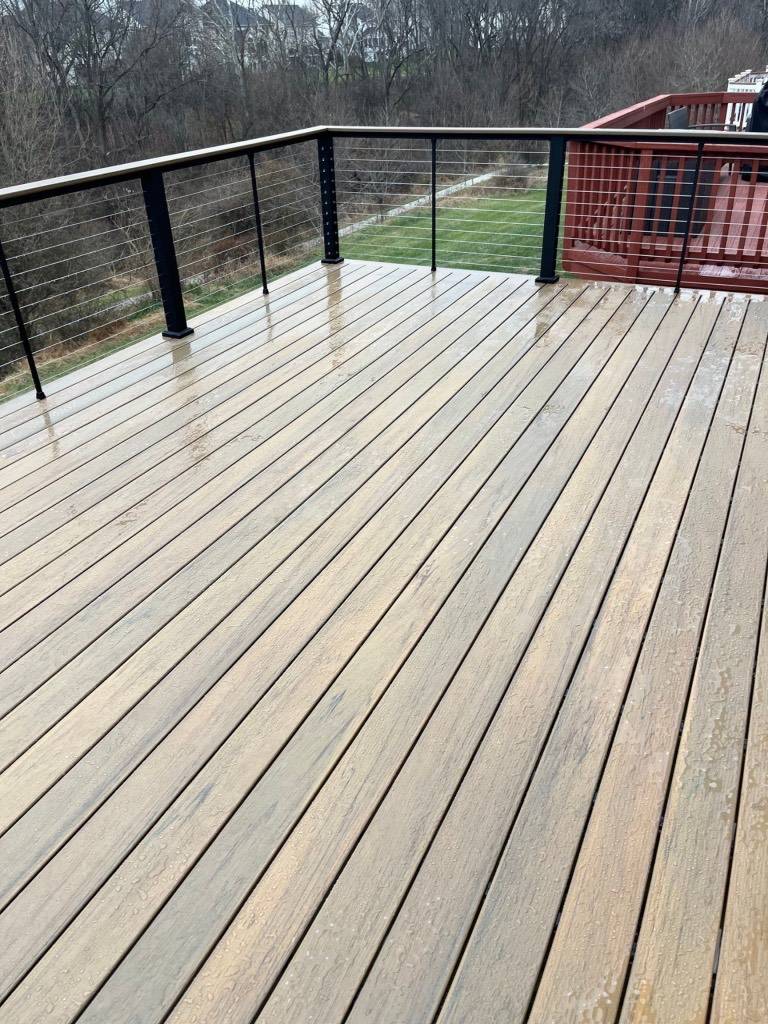
When it comes to outdoor decking, homeowners and builders have more choices than ever before. While traditional wood has been a staple for decades, composite decking like TimberTech and Trex is quickly gaining popularity. But what makes composite decking a compelling alternative to wood? Let's break down the differences and explore why the material choice matters, especially in Maryland's demanding climate.
TimberTech: The Modern Decking Solution
TimberTech is a composite decking material designed to withstand the elements while offering a sleek, polished look. Here are some of its standout features:
- Fade and stain limited warranty: TimberTech decking maintains its color and finish for years without requiring extensive upkeep.
- Moisture resistant: Unlike wood, which can absorb water and rot over time, composite resists moisture, making it ideal for humid or rainy climates.
- Easy to clean: Spills, dirt, and debris can be easily wiped or washed away without harsh chemicals.
- Won't splinter: Unlike traditional wood that can crack and splinter over time, composite remains smooth and safe.
- Insect resistant: Pests like termites and carpenter ants won't find a home in composite boards.
- Eco-friendly: Made with up to 85% recycled content, TimberTech helps reduce waste while providing a sustainable decking option.
- Color options: TimberTech offers a wide range of colors and styles, allowing homeowners to choose the perfect look for their outdoor space.
Traditional Wood Decking: The Classic but High-Maintenance Choice
While wood decking has a natural charm and a lower upfront cost, it comes with several downsides that add up over a deck's lifespan:
- Sun damage: Constant exposure to sunlight can cause wood to fade and warp.
- Mold and mildew growth: Wood absorbs moisture, making it susceptible to mold and mildew.
- Grease and food stains: Stains from spills can seep into the wood, making them difficult to remove.
- Cracking and splitting: Over time, wood can dry out, leading to cracks and splinters.
- Insect damage: Termites and other insects can cause structural damage to wood decking.
- Environmental impact: The demand for wood contributes to deforestation, whereas composite decking is made from recycled materials.
Why Maryland's Climate Puts Extra Pressure on Decking Materials
Maryland homeowners face a specific set of conditions that make material choice more consequential than it might be in a milder region. Understanding these factors helps you choose a decking product that will actually hold up over time, not just look good on the showroom floor.
Humidity and Summer Heat
From June through September, central Maryland counties including Howard, Montgomery, and Anne Arundel regularly see high humidity levels alongside temperatures in the upper 80s and 90s. Wood decking absorbs ambient moisture during humid nights and then dries out in the afternoon sun. That repeated cycle of expansion and contraction is what drives cracking, warping, and cupping in natural wood boards. Composite decking, with its capped polymer surface, resists that moisture absorption and remains dimensionally stable through the humid season.
Freeze-Thaw Cycles in Winter
Winters in Carroll, Frederick, and Harford counties bring genuine freeze-thaw stress. When moisture trapped in wood grain freezes, it expands and forces the wood fibers apart. After enough cycles, those micro-fractures become visible splits and raised grain. Composite boards do not absorb water the same way, so freeze-thaw cycling has far less effect on their structural integrity. This is one of the most practical reasons to consider composite when building a new deck in the greater Baltimore metro region.
Pollen, Rain, and Seasonal Staining
Maryland's spring pollen season is significant. Oak, pine, and grass pollen settle onto horizontal surfaces in a thick yellow-green layer that, on unprotected wood, can work into the grain and cause staining. On composite, a simple rinse with a garden hose clears pollen off quickly. Similarly, summer rain events and outdoor cooking leave fewer lasting marks on composite than on untreated or aging wood.
Composite Decking Brands Worth Knowing
Not all composite products are built the same way. The two major categories are capped composite and uncapped composite. Capped products have a protective polymer shell on all four sides of the board that blocks moisture, stains, and UV rays from reaching the wood fiber and plastic core. Uncapped products expose the core material and tend to absorb more moisture and fade more readily over time.
TimberTech AZEK
TimberTech's AZEK line is a cellular PVC product rather than a wood-fiber composite. Because it contains no wood fiber at all, it is essentially impervious to moisture absorption. It carries some of the longest warranties in the composite category and is available in a wide range of woodgrain patterns and colors, from light naturals to deep, rich tones.
Trex
Trex is one of the most recognized composite decking brands and uses a high percentage of recycled wood and plastic film in its boards. Trex's higher-end lines, including Trex Transcend, feature a capped surface that handles stains and fading well. The brand offers a broad color palette and is widely available through local distributors in the Baltimore and Washington metro areas.
When comparing brands, pay attention to the specific warranty terms for fading, staining, and structural integrity. A longer warranty period is not useful if the coverage excludes the types of damage most likely to occur in your climate.
Total Cost of Ownership: Upfront Price vs. Long-Term Spend
Composite decking typically costs more per linear foot than pressure-treated pine. That gap is a real difference, and it is worth understanding what you get in return.
Wood decks require annual or biennial maintenance to stay in good condition. That work includes:
- Sanding to smooth raised grain and splinters
- Cleaning with a deck wash solution
- Applying a stain, sealant, or paint to protect the surface
- Re-nailing or screwing boards that have popped
- Replacing boards that have split, rotted, or been damaged by insects
The cost of that maintenance in materials and time accumulates steadily. Over a 15 to 25 year period, the total spend on a wood deck often approaches or exceeds the initial cost of composite. Composite decks require only occasional cleaning and do not need sealing, staining, or sanding to maintain their appearance or performance.
If you plan to stay in your home for many years, the lower ongoing maintenance burden of composite tends to make financial sense. If you are selling within a few years and budget is the primary constraint, pressure-treated wood may still be a practical choice when installed with proper drainage and ventilation beneath the boards.
Making the Right Choice
If you're looking for a durable, low-maintenance, and environmentally friendly decking option, TimberTech and Trex stand out as superior choices for Maryland homeowners. They offer the beauty of wood without the drawbacks, ensuring that your outdoor space remains beautiful and functional through Maryland's full range of seasonal conditions.
Structural framing decisions, including the material used for joists and posts, also affect how long a deck holds up. A composite deck surface installed over a well-built pressure-treated or composite frame, with proper drainage and spacing, delivers the best combination of performance and longevity. Learn more about what a complete deck build or replacement involves on our services page.
Ready to plan your new deck? We provide free written estimates for homeowners throughout Howard, Montgomery, Carroll, Frederick, Baltimore, Harford, and Anne Arundel counties. Request your free estimate online or call us at (888) 371-1720 to talk through material options and get a no-pressure quote for your project.