Article · May 19, 2025 · Updated August 14, 2026
How to Choose Deck Lighting: A Practical Guide
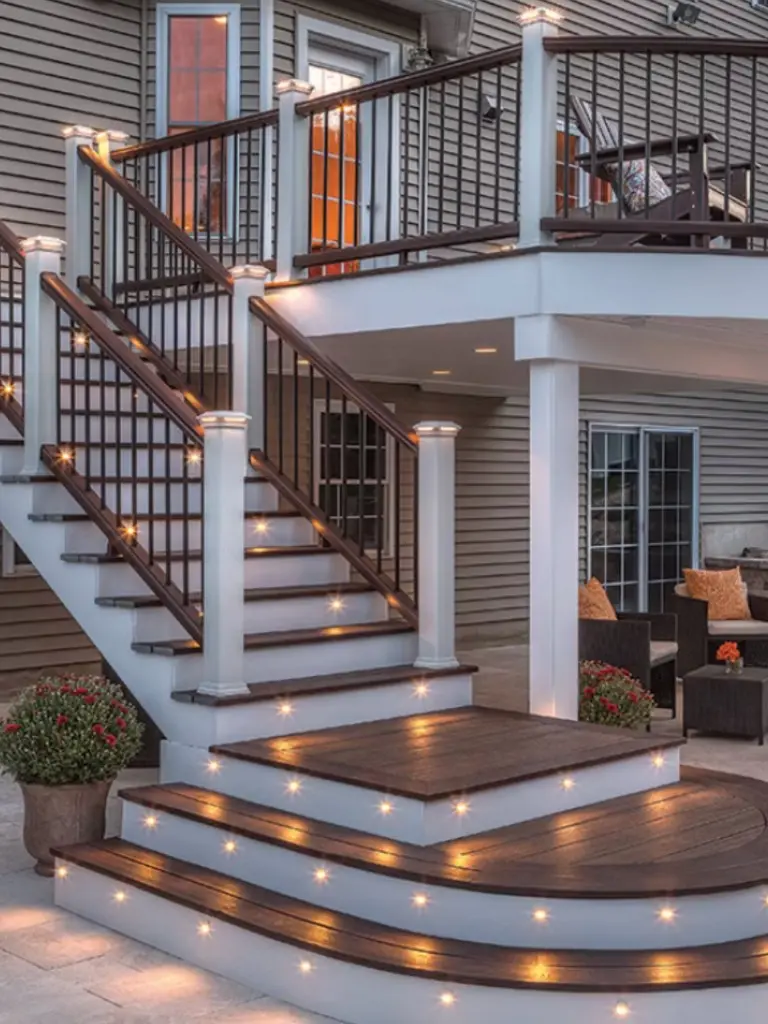
The best deck lighting plan starts with stairs and changes in level, then adds ambient light for seating and task light where people cook or serve food. Post-cap, rail, riser, recessed, and overhead fixtures solve different problems. Decide early whether you want wired or solar lighting, because wiring is easiest to conceal during construction.
Start With the Way People Move Through the Deck
Walk the route from the house to the deck, stairs, yard, and any side gate. Mark every step, landing, narrow passage, and change in elevation. Those areas usually need attention before decorative lighting does.
A fixture can be bright and still work poorly if it shines into someone's eyes or leaves the next step in shadow. Place low-level lights where they reveal the walking surface and edges without creating glare. Then look at seating, dining, and cooking areas as separate zones.
Choose Each Fixture for a Specific Job
- Riser lights illuminate stair treads and changes in level.
- Recessed deck lights can mark edges or paths when they are positioned to avoid glare.
- Post-cap lights provide a soft pool of light around railings and corners.
- Under-rail lights wash light downward while keeping the fixture less visible.
- Overhead or wall-mounted lights are useful near doors, grills, and serving areas that need broader illumination.
These types can be mixed, but more fixtures do not automatically produce a better result. A restrained plan with clear zones is usually easier to live with than a deck lit at the same intensity from end to end.
Wired and Solar Lighting Have Different Tradeoffs
Low-voltage wired systems use a transformer and concealed cable. They can provide coordinated controls and consistent placement, but the transformer capacity, cable routing, connections, and fixture compatibility all need to be planned as a system. If the deck is being built or resurfaced, decide on the wiring before boards and railings are installed.
Solar fixtures avoid cable runs and may suit isolated posts or locations that are difficult to wire. Their performance depends on the product, battery condition, and how much useful sunlight reaches the panel. Shade from the house, trees, or the railing can make two apparently identical locations behave differently.
Control Glare and Light Spill
View the proposed layout from seated eye level, from inside nearby rooms, and from neighboring properties. Downward-facing fixtures, lower output, and separate zones can make a deck easier to use without washing the yard in light.
Controls also matter. A timer, photocell, dimmer, or separate switching for stairs and gathering areas lets the lighting respond to how the deck is actually being used. Confirm that every control is compatible with the selected transformer and fixtures.
Plan the Installation Before Buying Fixtures
Outdoor electrical work should use equipment listed for its location and follow the manufacturer's instructions and current local requirements. The Trex deck-lighting installation guide, for example, specifies compatible components, wiring layouts, and connection details for its system. Those directions apply to Trex products, not to every lighting brand.
Maryland adopts statewide building codes, while local jurisdictions administer permits and may apply local amendments. Check the Maryland building-code information and contact the appropriate county or municipal building office before work begins.
A Short Deck-Lighting Checklist
- Mark stairs, landings, doors, edges, and changes in level.
- Separate safety, task, and ambient lighting needs.
- Check each fixture from standing and seated eye level.
- Decide between wired, solar, or a limited combination of both.
- Plan transformers, cable routes, controls, and future access.
- Confirm product instructions and local electrical requirements.
Sources and Further Reading
- Trex: Outdoor Deck Lighting Products
- Trex: How to Install LED Deck Lighting
- Maryland Department of Labor: Building Codes
- Maryland Department of Labor: Local Building Officials
Classic Remodeling's deck service page includes examples of deck layouts, railings, stairs, and lighting documented on the site.