
Article · August 2024
Energy Loss is Robbing You…
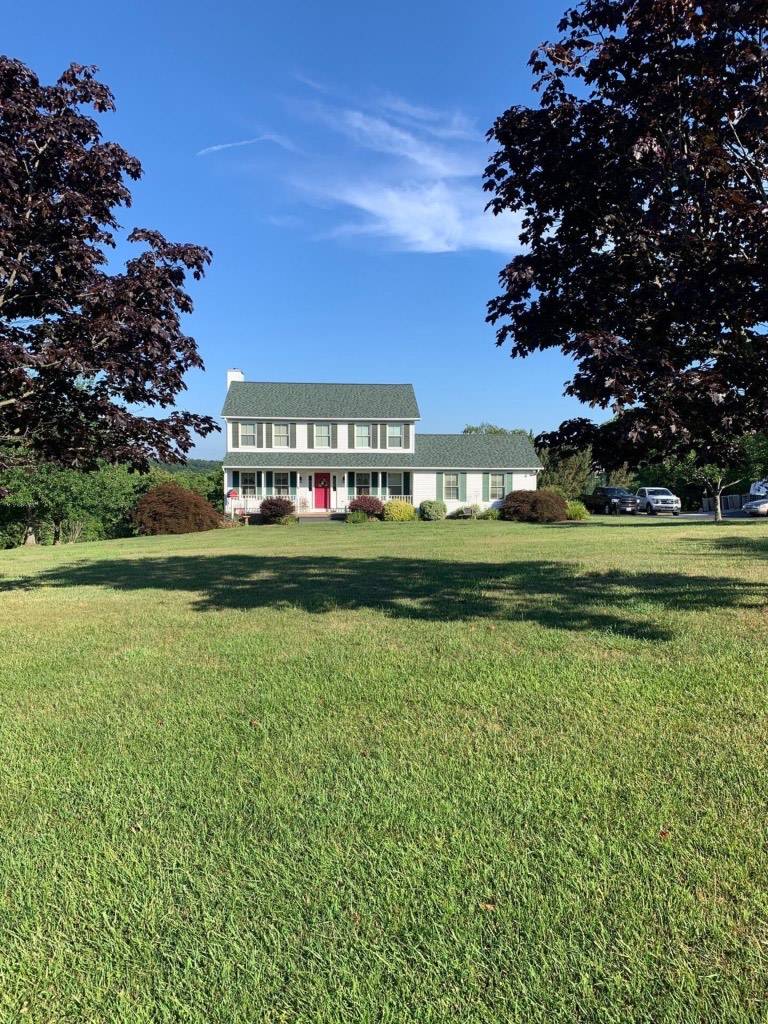
Typical homes lose up to:
- 10% through windows
- 15% through doors
- 15% through foundation
- 25% through the roof
- 35% through un-insulated walls
Nearly 25% of your home's wall is made up of studs that typically are not insulated, so it's like having one entire wall of your home with no insulation. Adding insulation to your home's exterior under new siding can help your home meet U.S. Department of Energy (DOE) insulation recommendations, as well as state and local codes.
The DOE says, "When new siding is to be installed, it's a good idea to consider adding insulation under new siding."
ProFold® Premium is made from Neopor® which contains high-purity graphite particles. The graphite reflects radiant heat, significantly improving insulation capacity compared to EPS insulation, while giving it a dark gray color.
The average family of four generates 4–6 gallons of water daily. Adding insulation to a home tightens it to reduce energy loss, but can also create potential moisture problems if water is trapped in the wall.
ProFold Premium is made with StayDry Technology®, a proprietary manufacturing process that makes the insulation 3x more breathable than comparable products. With a perm rating up to 4.7, ProFold Premium helps protect the home from potential moisture damage, letting water vapor generated inside the home escape.
- ProFold® Premium is a Building Code Compliant UL Certified Rigid Foam Insulation that helps builders and contractors meet IECC 2009, 2012 and 2015 Residential and Commercial Energy Code for Exterior Continuous Insulation Sheathing.
- ProFold® Premium is third party tested, qualified and certified under BASF UL Code Evaluation Report 5817-02, and it exceeds ASTM minimum insulation requirements by over 20%.
ProFold® Goes Beyond Energy Savings
- Levels the wall under new siding, providing a consistent, stable base for siding to be installed smooth and straight.
- Deters termite infestation with a built-in termite control agent.
- Protected by a Lifetime Transferable product warranty, one of the strongest in the industry, covering r-value retention, moisture absorption, and structural integrity.
- ProFold® Premium has achieved GREENGUARD Certification. GREENGUARD Certified products are certified to GREENGUARD standards for low chemical emissions into indoor air during product usage.
Why Maryland Homes Are Especially Vulnerable to Energy Loss
Maryland's climate creates a perfect storm for energy waste. Summers in Howard, Montgomery, and Baltimore counties bring weeks of high humidity and temperatures that push well into the 90s, forcing air conditioners to work overtime. Then, come November, the region swings into freeze-thaw cycles that contract and expand building materials, gradually loosening the seals around windows, doors, and the wall assembly itself.
Coastal storms pushing up from the Chesapeake Bay add driving rain that finds its way into gaps and cracks most homeowners never notice until the damage is done. Older homes, particularly those built before 1990, were constructed under energy codes that look almost laughable by today's standards. If your house is still wearing its original siding with no continuous insulation underneath, it is almost certainly hemorrhaging conditioned air every single season.
The result shows up in two places: your utility bills and your HVAC equipment's lifespan. A system that runs constantly to compensate for a leaky envelope wears out years ahead of schedule. Addressing the envelope, starting with the exterior walls, is often the highest-impact move a homeowner can make before upgrading mechanicals.
How Insulated Siding Works as a System
Most people think of siding as purely cosmetic, something that makes the house look fresh. In reality, the siding and everything underneath it function as a system. When that system includes continuous exterior insulation like ProFold Premium, it eliminates a problem called thermal bridging.
Thermal bridging happens when heat travels through the studs in your wall framing. Studs are much better conductors of heat than the batt insulation between them, so they act as tiny highways for energy to escape in winter and enter in summer. Because studs run roughly every 16 inches across your entire exterior, the cumulative effect is significant. Exterior continuous insulation wraps over all of those studs, breaking the bridge and keeping conditioned air where it belongs.
Products like Alside siding paired with rigid foam insulation boards give homeowners the dual benefit of a fresh exterior appearance and a meaningfully tighter building envelope. The combination can reduce heating and cooling loads in a typical Maryland home, which translates directly to lower monthly utility costs that compound over years of ownership.
When you are already investing in new siding, adding continuous insulation underneath represents relatively modest additional cost for outsized long-term return. It is the kind of upgrade that pays for itself and then keeps paying.
Moisture Management: The Hidden Risk When You Tighten a Home
A tighter home is more energy-efficient, but it introduces a challenge: where does moisture go? Every family produces substantial water vapor through cooking, bathing, laundry, and simply breathing. In a leaky older home, that moisture drifts out through gaps throughout the envelope. When you seal those gaps, moisture needs a managed path to escape or it will find its own, usually inside your wall cavity where it feeds mold and rots sheathing.
This is precisely why the breathability of any insulation product matters as much as its R-value. ProFold Premium's StayDry Technology and perm rating up to 4.7 allow water vapor to migrate outward rather than trap it. That is the engineering difference between a product designed as a complete wall solution and a cheap foam board that tightens the shell without managing what happens to moisture inside it.
In Maryland's humid summers, vapor management is not a nice-to-have feature. It is foundational to protecting your wall system for decades.
Windows and Doors: Addressing the Other Major Leak Points
Even with excellent insulated siding, windows and doors account for a combined 25% of a home's energy loss according to the breakdown above. If your windows are single-pane or are original double-panes from the 1980s or 1990s, the gas fill between the panes has almost certainly dissipated, leaving you with little more than two layers of glass separating your living room from a Maryland winter.
Brands like ProVia and Vytex manufacture replacement windows engineered for the Mid-Atlantic climate, with low-E glass coatings that block infrared heat in summer while retaining interior warmth in winter. Pairing new energy-efficient windows and properly sealed exterior doors with insulated siding delivers a compounding improvement across the biggest weak points in a typical home's envelope.
If full window replacement is not in the current budget, ensuring that frames are properly caulked and weatherstripped is a meaningful interim step. But for homes with windows approaching 20 or more years of age, the energy math typically favors replacement.
What to Expect When Classic Remodeling Assesses Your Home's Envelope
When our team visits a home in Howard County, Carroll County, or anywhere else across Central Maryland, we look at the full picture: siding condition, visible gaps around penetrations, window and door frame integrity, and signs of moisture intrusion. We explain what we find in plain language and help you prioritize the improvements that will have the greatest impact given your home's specific construction.
We are licensed under MHIC #51277 and have been helping Maryland homeowners solve these problems since 1997. Our siding installations are designed as complete wall systems, not cosmetic patches.
Ready to find out how much your home's energy losses are costing you? Request a free written estimate or call us at (888) 371-1720. We serve homeowners across Howard County, Baltimore County, Carroll County, and the surrounding Maryland region.