
Article · July 2024
Everything You Need to Know About Skylights
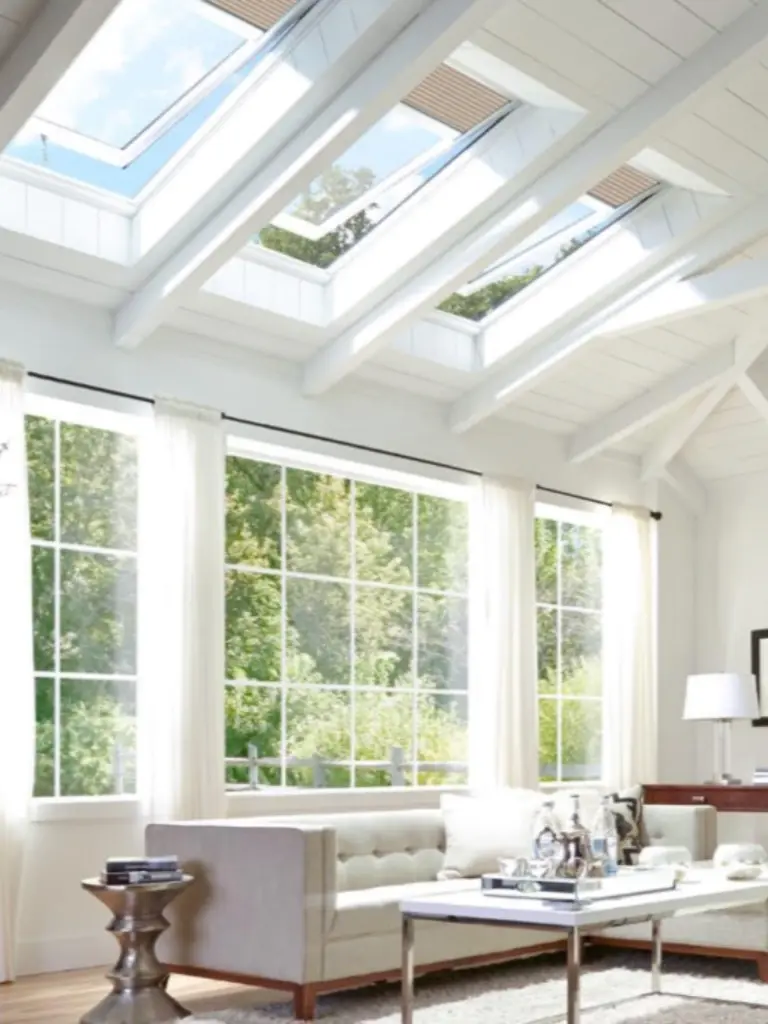
The Benefits of Skylights
Natural light from above is a powerful design tool that enhances the look and feel of your home throughout the day. Combined with fresh air, these benefits can significantly improve your indoor air quality, creating a healthier living environment. Additionally, skylights can reduce your reliance on electric lighting and air conditioning, leading to energy savings.
With VELUX skylights, which Classic Remodeling makes easy to install, maintain, and operate, it's clear why adding a skylight is a smart choice for your home.
Why Maryland Homeowners Choose Skylights
Maryland's climate offers a compelling case for skylights. We have roughly 200 sunny days per year across Howard, Montgomery, and surrounding counties, and a well-placed skylight can meaningfully reduce daytime artificial lighting needs for interior spaces that would otherwise feel dark year-round. Kitchens over a dining area, windowless hallways, master bathrooms, and stairwells are all spaces where a single skylight transforms the feel of the room without requiring structural changes to exterior walls.
The ventilation benefit is equally relevant here. Maryland summers bring high humidity, and venting skylights that open to allow hot air to escape from interior rooms leverage natural convection: warm air rises and exits through the skylight while cooler air enters through lower openings. This passive cooling effect is most pronounced in two-story rooms, stairwells, and kitchens where heat builds up. VELUX fresh air skylights can be opened manually or operated remotely, and solar-powered models close automatically when rain is detected, which matters in a state that averages over 40 inches of precipitation per year.
How Strong Are Skylights?
Installing a skylight involves cutting a hole in your roof, so the strength and durability of the glass are crucial. VELUX offers various glass options designed for strength and safety, ensuring that your skylight will keep your home safe.
- Laminated Glass: This type of glass is cleaner, quieter, and safer than standard skylight glass. It meets all safety and compliance codes for out-of-reach applications and comes with a 10-year Hail Breakage Warranty.
- Impact Glass: Ideal for areas prone to large storms, Impact Glass is highly resistant to flying debris and meets the requirements for wind-borne debris protection.
- Snow Load Glass: Perfect for regions with heavy snowfall, Snow Load Glass is reinforced to support the added weight of accumulated snow, preventing leakage.
For most Central Maryland homes, laminated glass is the appropriate default choice. Harford and Baltimore counties occasionally receive hail in spring and early summer thunderstorm seasons, and the laminated glass option with its hail warranty provides peace of mind in those conditions. Impact glass is relevant for homes along the Chesapeake Bay's eastern shore corridor, where storm events can be more severe. Maryland's snowfall is generally not extreme enough to require snow load glass in most locations, though Frederick and Carroll county homes in elevated areas that receive heavier accumulation may want to discuss this with their installer.
Do Skylights Make a Space Hotter?
Climate control in a space with skylights can be a concern, whether it's heat gain in summer or heat loss in winter. VELUX skylights are Energy Star qualified in all 50 states and certified by the National Fenestration Rating Council for thermal performance. To further control the climate, you can pair VELUX skylights with skylight shades, which offer additional insulation and light control.
The concern about heat gain is valid and worth addressing directly. A south-facing skylight without any shading will admit direct solar radiation during summer months, which can raise room temperatures noticeably. The good news is that VELUX's Low-E glass coatings reduce solar heat gain substantially compared to clear glass, and the addition of a cellular shade or blackout blind adds another layer of control. In Maryland's climate, the practical guidance is to position skylights on north or east slopes where possible for diffuse rather than direct light, and to equip any south-facing skylights with interior shading from the outset.
Winter heat loss is a separate consideration. A skylight is a penetration through the roof assembly, and even a well-insulated unit will have a higher U-factor than the surrounding insulated roof. VELUX's double-pane Low-E units perform well by skylight standards, and pairing them with a cellular shade during cold nights adds meaningful insulation value. The net result for most Maryland homes is positive: daylight harvest and ventilation benefits outweigh the modest thermal penalty, particularly when the skylight is specified with appropriate glass and shading.
Skylight Sizes and Placement
Determining the right size for your skylight depends on your room's floor space. Typically, a skylight should be 5% of the floor space in rooms with many windows and 15% in rooms with little natural light. Your skylight installer will help you determine the best size for your home.
Beyond the percentage guidelines, placement within the roof plane affects light quality and distribution. A skylight positioned toward the center of a room illuminates the space most evenly. One positioned toward a wall creates a brighter wash along that wall surface, which can be an intentional design choice for artwork or a focal wall. The angle of the roof also matters: steeper pitches admit more winter light when the sun is lower on the horizon, while shallower pitches can admit more summer light. Maryland's latitude of roughly 39 degrees north means the sun angle varies considerably between December and June, which is worth factoring into placement decisions.
Structural considerations also affect size and location. Skylights are ideally positioned between rafters without cutting structural members. Larger units that span multiple rafter bays require a header to redistribute the load, which adds to the structural work required. A pre-installation consultation with your roofing contractor identifies these constraints and ensures the final placement is both optimal and structurally sound.
Combining Skylight Sizes
If one skylight or size isn't enough, VELUX Combi-Flashing allows you to group multiple skylights together. This requires a certain roof pitch, which your installer can assess during your consultation. Combi-Flashing can be used with various roofing materials, from shingles and shakes to higher-profile materials like Spanish tile.
Grouping skylights in a run of two, three, or four units is a particularly effective approach for long interior spaces like hallways or kitchen-to-dining open plans. The combined effect dramatically increases natural light while maintaining a cleaner exterior appearance than multiple individual cutouts spaced irregularly. The Combi-Flashing system also simplifies installation because the flashing detail is shared between adjacent units rather than requiring separate weatherproofing around each individual frame.
All About Skylight Installation
- Deck-Mounted Skylights: These are nailed directly to your roof deck, giving them a lower profile. They are ideal for new construction homes or new skylight cut-ins.
- Curb-Mounted Skylights: More common on low-sloped roofs, these skylights are installed on a curb or frame attached to the roof. The skylight is then attached to the top of the curb, similar to a shoebox lid.
Proper flashing is the most important factor in long-term skylight performance. A skylight that is correctly sized and positioned but poorly flashed will leak within a few years, often causing ceiling and drywall damage that costs more to repair than the skylight installation itself. VELUX's integrated flashing kits are designed to work with specific roofing materials, and a complete replacement of the surrounding shingles during installation rather than working around existing shingles is best practice. If your home is due for a roofing replacement, adding skylights at the same time is the most efficient and leak-resistant approach because the entire system is freshly installed together.
The interior finish also requires attention. A skylight installation that is tight at the roofline but poorly insulated or finished at the shaft, the angled or vertical tunnel connecting the skylight to the ceiling, will still allow heat transfer and condensation in the shaft during cold weather. Properly insulated shaft construction is part of a complete, quality installation.
Skylights as Part of a Larger Exterior Project
Skylights pair naturally with other exterior projects. If you're adding a sunroom or screen enclosure, skylights in the roof of the enclosure extend the space's usability across more hours of the day. If you're building or renovating a covered porch or portico, translucent roof panels serve a similar function to skylights, bringing light into the covered space without sacrificing weather protection. And if your home's roofing system is being replaced, it's the optimal time to integrate new skylights because the flashing and surrounding shingles are fresh, reducing the risk of incompatibility or leaks at the penetration.
Skylights are an excellent addition to any home, offering natural light, fresh air, and energy savings. With various types and sizes available, and easy installation options from Classic Remodeling, incorporating skylights into your home has never been easier. Whether you're looking to enhance your home's aesthetic, improve indoor air quality, or reduce energy costs, VELUX skylights are a smart and stylish solution.
Classic Remodeling has served Maryland homeowners since 1997, and our team is familiar with the roofing systems, roof pitches, and weather conditions common across Howard, Montgomery, Carroll, Frederick, Baltimore, Harford, and Anne Arundel counties. To learn whether skylights are a good fit for your home and to get a free written estimate, visit /quote/ or call (888) 371-1720.