
Article · August 4, 2024
The Resilience of Quality Siding: A Tale of Hail Damage
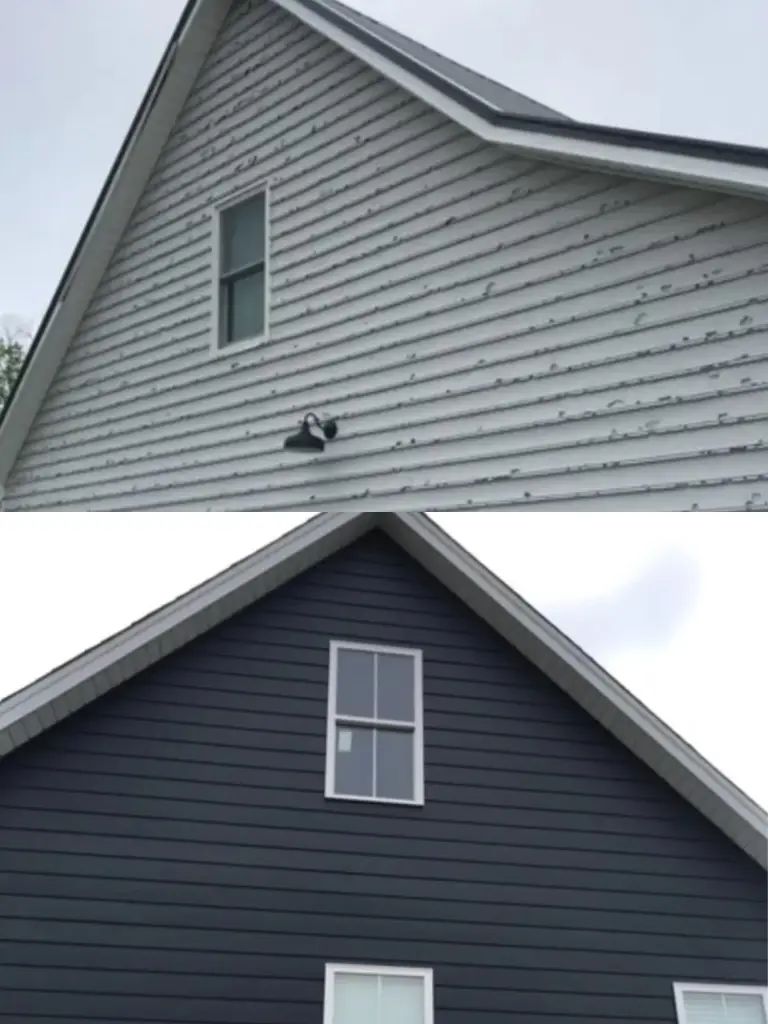
The Scene
In the aftermath of a fierce hailstorm, homeowners are often left to assess the damage. Hail, with its rapid descent and often significant size, can wreak havoc on exterior surfaces. One home, clad in standard vinyl siding, now displays a landscape of dents, holes, and cracks, each mark a testament to the storm's ferocity. The home next door, protected by Alside siding, stands unscathed, its surface smooth and intact, as if the storm never occurred.
Understanding the Difference
Regular Siding: Traditional vinyl siding, while popular for its affordability and ease of installation, often falls short in the face of severe weather conditions. The impact of hailstones can leave behind unsightly damage, compromising the home's aesthetic appeal and potentially leading to further issues such as water infiltration and mold growth.
Alside Siding: Alside siding, on the other hand, is engineered for durability and resilience. Made from high-quality materials and designed to withstand extreme weather conditions, Alside siding provides superior protection. Its advanced technology not only ensures a more robust defense against impacts but also maintains the siding's appearance and structural integrity over time.
The stark difference between a house with regular siding showing extensive hail damage and one with undamaged Alside siding underscores the importance of investing in quality materials for your home's exterior. Not only does Alside siding offer superior protection and durability, but it also enhances the beauty and value of your home. When it comes to safeguarding your investment and ensuring long-lasting appeal, the choice is clear. Choose Alside siding for peace of mind and a resilient home that stands strong against the elements.
How Hail Damages Siding, and Why Not All Vinyl Is Equal
Maryland does not sit in the traditional hail belt of the Great Plains, but that does not mean our region escapes the problem. Severe thunderstorms tracking up the I-95 corridor from the Carolinas, and cold-front collisions that develop over the Appalachian foothills to the west, regularly produce hailstorms affecting Howard, Carroll, Frederick, Baltimore, and Harford counties. Hail events strong enough to damage roofing and siding occur across central Maryland multiple times each year, and their distribution is localized enough that neighborhoods just a few miles apart can have completely different outcomes from the same storm cell.
When a hailstone strikes standard vinyl siding, the physics are straightforward: the impact transfers energy into the panel, and if the siding lacks the thickness, formulation, and structural backing to absorb and distribute that energy, the panel deforms. Small hailstones leave circular dents. Larger hailstones, particularly at the acute angles that occur when a stone strikes near a panel edge, can crack or puncture the material outright. Either way, the damage compromises the siding's water-shedding function and creates pathways for moisture to penetrate behind the panel and into the wall assembly.
The difference between standard commodity vinyl siding and engineered products like Alside comes down to several factors: panel thickness, the specific polymer formulation, whether the siding has any continuous backing material, and how the panels lock together at the seams. Thicker panels resist denting better. Tighter polymer formulations that incorporate impact modifiers maintain flexibility across a wider temperature range, which is significant because vinyl siding becomes considerably more brittle in cold weather. A panel that performs adequately during a summer hailstorm may crack badly during a February ice event when temperatures are in the twenties.
What to Look for in Hail-Resistant Siding Products
The siding industry uses impact rating systems to classify how products perform under standardized hail simulation tests. The most common is a steel ball drop test that rates panels from Class 1 through Class 4, with Class 4 being the highest impact resistance. Some manufacturers also reference ratings from organizations like the Underwriters Laboratory or use their own proprietary testing protocols. Understanding these ratings helps homeowners compare products objectively rather than relying solely on marketing claims.
When evaluating hail-resistant siding options, look for the following characteristics:
- Panel thickness: Heavier-gauge panels offer better impact resistance. Look for panels rated at .044 inches or thicker as a baseline for improved impact performance.
- Impact modifier content: Better products incorporate more impact modifier into the vinyl formulation, improving the material's ability to flex and absorb impact energy without cracking.
- Low-temperature impact resistance: This specification tells you how the panel performs when cold. In Maryland's winters, cold-temperature ratings matter for the same ice and freeze events that can produce hail-like impacts from falling ice or debris.
- Integrated backing: Insulated siding products that include a continuous foam backing layer distribute impact energy over a larger area and resist deformation better than hollow-back panels of equivalent face thickness.
- Warranty coverage: Quality siding manufacturers back their products against hail damage up to a specified stone diameter. Review the warranty terms carefully and compare what is actually covered versus what requires a separate endorsement.
Alside's premium product lines are engineered with these considerations in mind. Their heavier-gauge products incorporate impact modifiers and are designed to meet or exceed the performance benchmarks that separate commodity siding from genuinely resilient exterior cladding. Other quality options worth considering include LP SmartSide engineered wood siding, which offers genuine impact resistance through its composite construction and is backed by explicit hail coverage in its warranty documentation.
The Moisture Problem Behind Hail Damage
Hail damage to siding is not just an aesthetic problem. The more serious consequence, one that often does not become apparent until months or years after a storm, is moisture infiltration into the wall assembly. A cracked or punctured siding panel creates a direct pathway for wind-driven rain to enter the space behind the siding. From there, water can saturate the house wrap, reach the sheathing, and begin the slow process of rot and mold development that compromises both the structural integrity of the wall and the indoor air quality of the home.
This is particularly concerning in Maryland's climate because our humid summers provide ideal conditions for mold growth. Once moisture establishes itself in the wall cavity, mold can develop within days of a rain event. Remediation is expensive and disruptive, requiring removal of the siding, replacement of damaged sheathing, mold treatment, reinstallation of house wrap, and new siding. A single hailstorm that damages a handful of panels can, if left unaddressed, lead to wall assembly damage that costs many times the value of the original siding repair.
Homeowners who experience a hailstorm should inspect their siding carefully in the days following the event, looking not just for obvious cracks or holes but also for subtle denting patterns along panel faces, damage at panel seams where panels lock together, cracked trim pieces at corners and around window and door openings, and any visible separation between the panel face and the locking channel at top or bottom edges. These less obvious signs of impact damage can still compromise the weathertight function of the installation even when the panel appears mostly intact from a distance.
Insurance Claims and Professional Damage Assessment
If you have experienced a significant hailstorm, documenting damage promptly and thoroughly is important for any insurance claim. Most homeowners insurance policies cover hail damage to siding, but the claims process requires documentation of the damage and, in many cases, a contractor's assessment to support the scope of the claim. Some insurers send their own adjusters; others rely on contractor assessments as part of the documentation.
When working with an insurance claim on siding damage, a few things are worth knowing. Insurers typically require that damaged siding be repaired or replaced within a certain timeframe to prevent secondary damage from moisture infiltration. If your claim involves matching replacement panels to existing undamaged siding, your policy may or may not cover the cost of replacing undamaged panels to achieve a consistent appearance; this coverage language varies significantly between policies and is worth reviewing carefully before the claim is finalized.
A licensed Maryland contractor can help document damage accurately, provide a detailed scope of work for the insurance company, and explain your options for both repair and full replacement. In some cases, particularly on homes with older siding that is no longer manufactured, a full siding replacement on the affected elevations may be the most cost-effective and weathertight solution even when only a portion of the panels show obvious impact damage.
Upgrading After a Hail Event
A hailstorm, as frustrating as it is, sometimes creates an opportunity to upgrade siding that was already aging or underperforming. If your existing siding is more than 20 years old, has already lost significant color, shows signs of moisture infiltration, or lacks the insulation value of modern products, replacing it with a high-performance option after a storm event is a genuinely practical choice rather than simply spending money on a problem.
Alside's premium products, insulated options like Prodigy, and engineered wood alternatives like LP SmartSide all represent meaningful improvements over commodity vinyl in terms of impact resistance, insulation value, and long-term durability. Choosing a quality replacement product after a hail event means you are not simply restoring the previous condition; you are building a more resilient exterior that is better positioned to handle the next storm.
Classic Remodeling handles full siding replacement projects across Maryland, including post-storm repairs and upgrades. Homeowners in Howard County, Baltimore County, and Anne Arundel County who have experienced hail damage can contact us to schedule an assessment and review their options. If you are considering a proactive upgrade to more resilient siding before the next storm season, our free estimate process is a good place to start the conversation.
Protect Your Home Before the Next Storm
Maryland's storm season does not wait for convenient timing. If your siding is showing its age or you have already experienced hail damage you have been putting off addressing, Classic Remodeling is ready to help. We serve Howard, Montgomery, Carroll, Frederick, Baltimore, Harford, and Anne Arundel counties and have been doing so since 1997. Request a free written estimate online or call (888) 371-1720 to speak with our team about your siding options.