
Article · September 14, 2025 · Updated August 14, 2026
How to Prepare Your Home Exterior for Fall
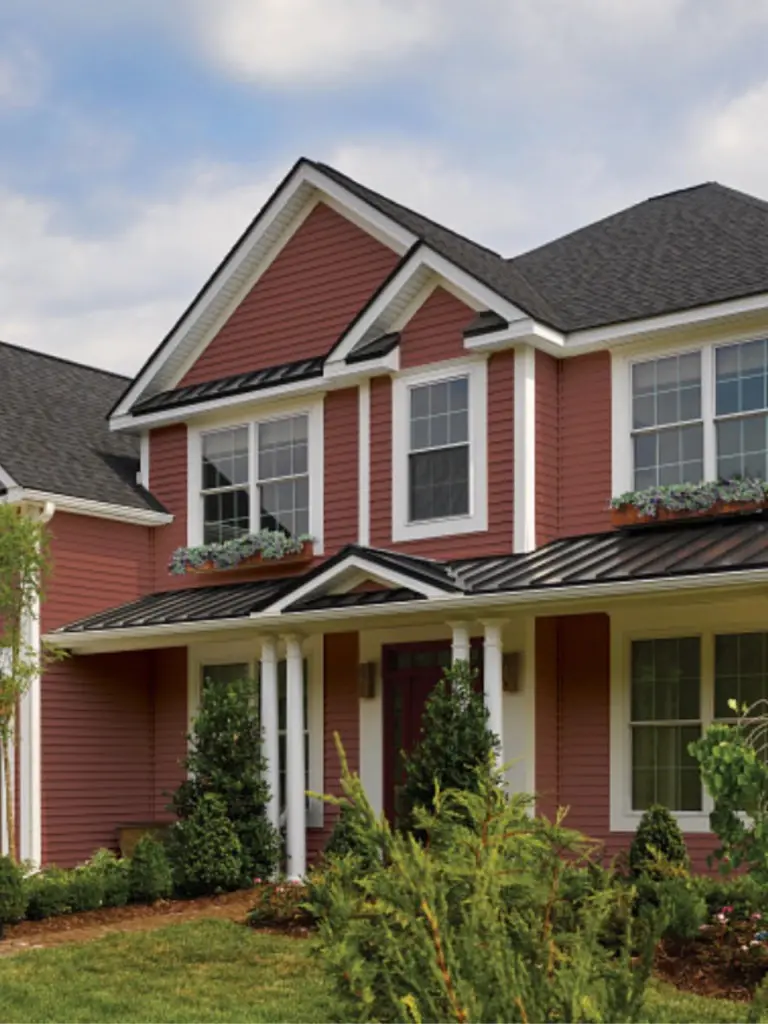
Prepare your home's exterior for fall by clearing gutters and downspouts, checking the roof and flashing from a safe vantage point, sealing obvious air leaks around windows and doors, inspecting siding for damage, and checking decks and railings for loose or deteriorated parts. Fix active leaks and safety problems first; larger replacement projects should be based on condition, not the season alone.
1. Clear Gutters and Check Drainage
Remove leaves and debris from gutters, downspouts, roof valleys, and exterior drains so water has a clear path away from the house. Watch where each downspout empties and look for standing water, soil erosion, or water flowing back toward the foundation.
Work from the ground whenever possible. If reaching the gutters requires an unstable ladder position or walking on the roof, hire someone with the proper equipment rather than turning routine maintenance into a fall hazard.
2. Check the Roof Without Walking on It
From the ground or through an accessible attic, look for missing or lifted shingles, damaged flashing, open seams, sagging gutters, daylight around penetrations, or moisture staining. After severe wind or hail, arrange a closer inspection if something looks different.
The National Roofing Contractors Association recommends residential roof inspections in spring and fall and cautions homeowners against walking on a roof without the proper experience and safety equipment. The roof's condition matters more than a simple age cutoff.
3. Find Drafts Before Replacing Windows or Doors
Check for worn weatherstripping, visible gaps, loose locks, cracked exterior sealant, and doors or windows that no longer close evenly. Some drafts can be corrected with maintenance or air sealing; damaged frames, failed glass seals, water intrusion, or poor operation may justify a fuller evaluation.
The U.S. Department of Energy distinguishes caulk for stationary joints from weatherstripping for moving components. It also recommends evaluating the complete building envelope rather than assuming every comfort problem requires a replacement window or door.
4. Inspect Siding, Trim, and Exterior Sealant
Walk around the house and look for loose or cracked siding, open joints, peeling finish, soft trim, damaged flashing, and staining below windows or roof intersections. A cosmetic issue can usually wait; active water entry or deteriorated material around an opening deserves faster attention.
Do not seal over wet or damaged material without finding the source. Trapping moisture behind new caulk or trim can hide the symptom while the underlying problem continues.
5. Check Decks, Porches, and Enclosures
Check stairs and railings for movement, wood for soft spots or splits, boards for raised fasteners, and the area around posts for drainage problems. Clear leaves from gaps and from places where they hold moisture against the house. For screened rooms, inspect mesh, spline, door closers, roof flashing, and drainage.
Furniture, grills, planters, and outdoor heaters also need a seasonal plan. Follow the manufacturer's storage and clearance instructions, and keep heavy or heat-producing items away from exits and walking paths.
What Should Be Fixed First?
Prioritize active leaks, loose railings or stairs, electrical hazards, and openings that allow water into the house. Next, address drainage and air leaks that can worsen comfort or moisture problems. Faded finishes and other cosmetic work can follow when the structure is sound.
Fall can be a convenient time to inspect the exterior, but it is not a reason by itself to replace a roof, window, door, or siding system. Base that decision on observable condition, repair history, expected service life, budget, and the scope of the problem.
Sources and Further Reading
- NRCA: Maintaining Residential Roof Systems
- NRCA: Consumer Roofing Resources and Safety Guidance
- U.S. Department of Energy: Insulation and Air-Sealing Essentials
If your fall inspection uncovers a larger exterior issue, Classic Remodeling's current service pages explain its roofing, window, door, siding, and porch work.