
Article · February 11, 2025 · Updated August 14, 2026
How to Choose a Patio Door: Sliding vs. Hinged
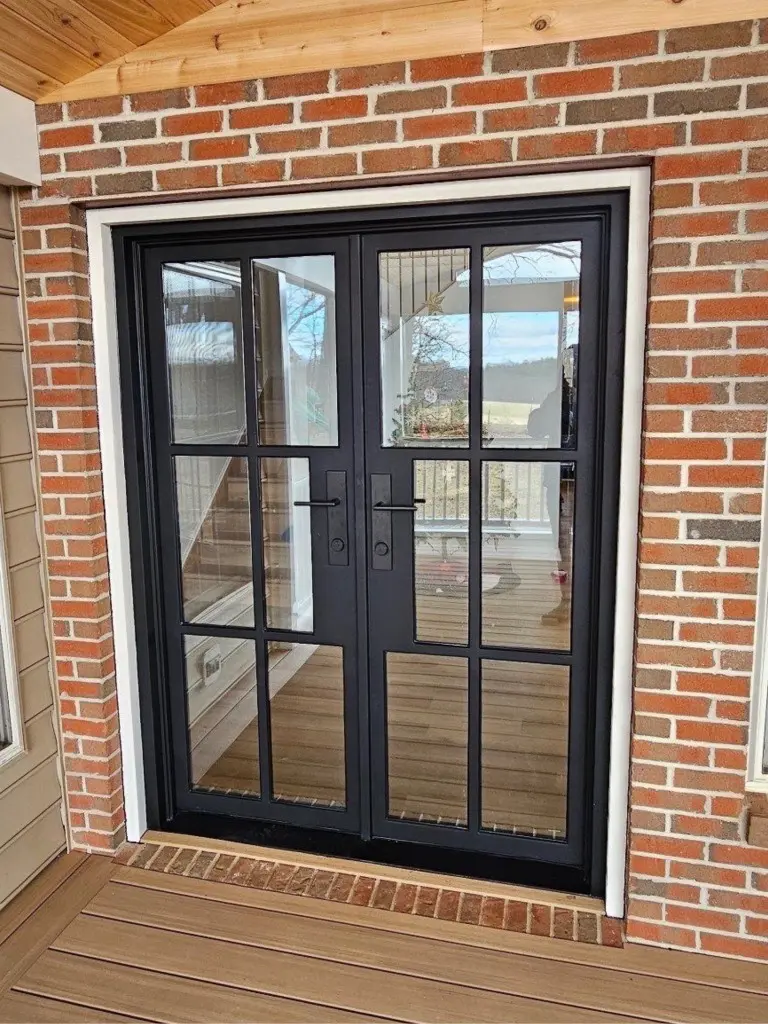
Choose a patio door by comparing wall space, furniture clearance, threshold access, glass area, operation, weather exposure, and maintenance. Sliding doors preserve floor space; hinged doors need a clear swing path and offer a more traditional appearance. For energy performance, compare the exact product's ENERGY STAR climate-zone certification and NFRC ratings instead of relying on the frame material or brand alone.
Sliding and Hinged Patio Doors Solve Different Problems
A sliding patio door moves along its track, so it does not need room to swing into the house or onto a deck. That can help in dining areas, smaller rooms, and furnished outdoor spaces. The tradeoff is that part of the opening remains occupied by a fixed panel in a typical two-panel configuration.
A hinged patio door opens like an entry door. A single active panel, paired doors, or another configuration may provide a wider clear opening, but furniture, curtains, railings, landings, and traffic paths cannot interfere with the swing. Wind exposure and the direction of operation also deserve attention.
Compare the Exact Energy Labels
A patio door has a large glazed area, so the complete assembly matters. ENERGY STAR recommends checking both its certification label and the NFRC label. Certification should match the climate zone, while the NFRC label provides ratings for the complete product rather than one component.
U-factor measures heat transfer; lower values indicate less heat transfer through the assembly. Solar heat gain coefficient describes how much solar radiation enters through the product. The right balance depends on climate, orientation, shading, and the amount of glass. A “Low-E” description by itself does not provide enough information to compare two doors.
Plan the Opening and Threshold
Measure more than width and height. Check the floor level on both sides, the depth of the wall, trim clearance, exterior landing, water exposure, nearby outlets, and the path used to move furniture through the opening. A low threshold may improve access, but water management and product limitations still apply.
Replacement work should address the rough opening, flashing, sill, drainage path, insulation, air sealing, and interior and exterior trim. A well-rated door cannot make up for a damaged opening or poor water control around the frame.
Glass, Screens, and Daily Use
More glass can improve the view and daylight, but privacy, glare, safety glazing, and cleaning also matter. Grids, decorative glass, tint, and internal blinds change appearance and may change the available performance ratings. Confirm the final glass package on the order rather than relying on a showroom sample.
For a sliding screen, test the latch and rolling action and ask how the screen can be adjusted or removed for cleaning. A screen helps reduce insects when it is closed and in good repair; it does not control humidity, pollen, or conditioned-air loss when the glass door is open.
What ProVia Currently Offers
ProVia currently offers several sliding patio-door lines, including Endure, Aeris, and Aspect. Options vary by line, so frame construction, panel configurations, colors, glass, hardware, screens, and performance ratings should be checked on the exact product.
The current Endure page lists two-, three-, and four-panel configurations, an all-vinyl construction, a top-hung screen, and a sill designed to manage water. These are manufacturer specifications, not a reason to skip site-specific planning.
For a traditional swing, ProVia's hinged patio-door page shows its available configurations and product families. Warranty terms differ by product and component, so read the current written warranty rather than assuming every option has the same coverage.
Maintenance Still Matters
ProVia's maintenance guidance calls for cleaning tracks and weep holes, checking weatherstripping and caulk, and caring for hardware according to the product instructions. Dirt in a track, blocked drainage, or an out-of-adjustment panel can affect operation even when the door itself is relatively new.
A Patio-Door Comparison Checklist
- Sliding or hinged operation, and why?
- Clear opening and threshold needs?
- Interior and exterior furniture clearance?
- ENERGY STAR climate-zone certification and NFRC ratings?
- Glass, screen, grid, hardware, and security options?
- Water management and condition of the existing opening?
- Cleaning, adjustment, and written warranty requirements?
Sources and Further Reading
- ENERGY STAR: Residential Windows, Doors, and Skylights
- ProVia: Sliding Glass Patio Doors
- ProVia: Hinged Patio Doors
- ProVia: Door Cleaning and Maintenance
Classic Remodeling's doors page lists the patio-door products and project details currently documented on this site.