
Article · July 2024 · Updated August 14, 2026
How to Choose a Front Door Color
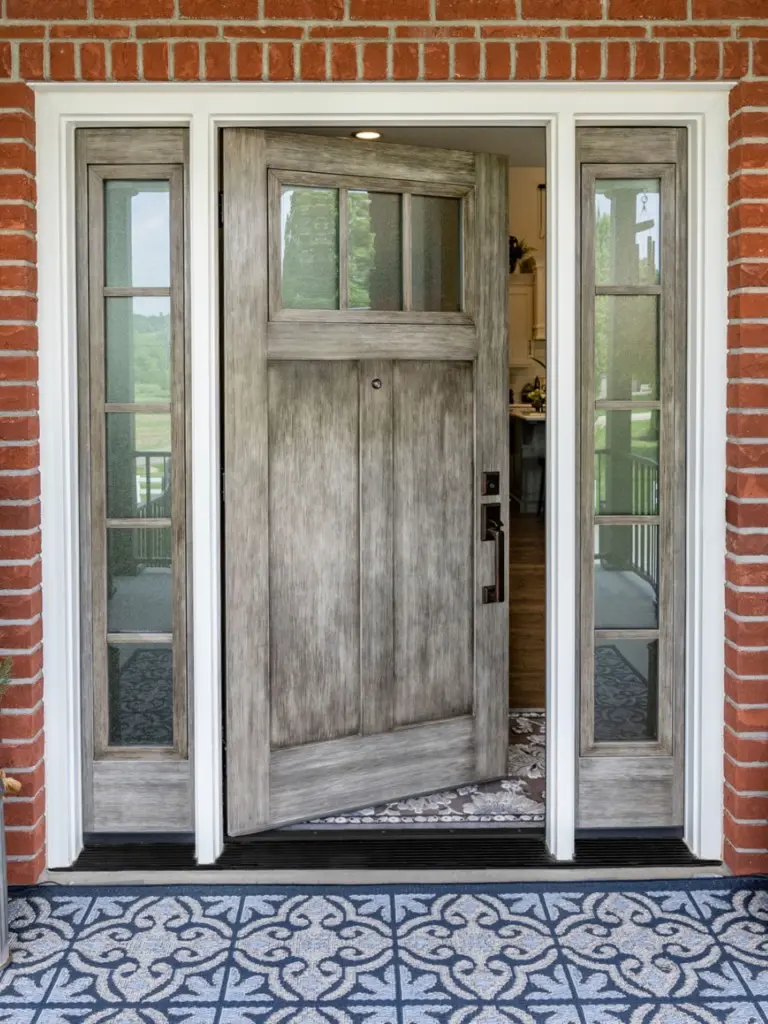
Choose a front-door color by comparing it with the home's fixed materials—brick, stone, siding, trim, roof, and hardware—then view a large sample in morning and afternoon light. Color trends can offer ideas, but undertone, sun exposure, finish durability, and the door material matter more than the year's most popular shade.
Start With the Colors That Will Not Change
A front door is one piece of a larger exterior. Begin with the brick, stone, roof, siding, trim, porch floor, and metal finishes that will stay in place. A door color does not have to match those materials, but it should look deliberate beside them.
Look closely at undertones. A gray siding sample may lean blue, green, or brown. Brick may contain more than one red, orange, tan, or charcoal note. Pulling a less obvious color from an existing material can create contrast without making the door look disconnected.
Use Color Families as a Starting Point
There is no universal “best” front-door color, but a few broad approaches make comparison easier:
- Dark neutrals such as charcoal, deep brown, or black can create a defined focal point against lighter siding.
- Mid-tone blues and greens can add color while remaining quieter than a bright primary shade.
- Deep reds can work with brick, stone, or neutral siding when the undertones are compatible.
- Warm wood tones can connect with natural stone, porch ceilings, or other stained details.
- Light neutrals can keep an entry calm, although dirt and scuffs may be more visible.
These are design examples, not predictions about resale value or guarantees about what a future buyer will prefer.
Test the Actual Finish Outdoors
Small digital swatches are unreliable. Screen settings, room lighting, and product photography all change how a color appears. ProVia warns that colors shown on a monitor may differ from the actual product, which is a useful rule even when choosing another brand.
Compare a physical sample at the doorway in the morning, midday, and late afternoon. View it from the sidewalk or driveway as well as from a few feet away. If the door has sidelites, glass, or a storm door, include those elements in the comparison because reflections and shadows can change the effect.
Consider Sun Exposure and Maintenance
Color is only part of the finish decision. Door material, factory-finish instructions, overhang depth, storm-door configuration, and direct sun can affect care requirements. Read the door manufacturer's finishing and warranty documents before repainting a new product or placing a dark color on a strongly exposed opening.
ProVia's maintenance guidance, for example, separates routine cleaning from refinishing and provides product-specific instructions. A finish should be maintained according to the actual door, not a generic paint schedule.
Painted or Stained?
Paint gives the widest range of solid colors. Stain is intended to show a wood-grain appearance and varies with the door skin, stain process, and manufacturer. Neither choice is automatically more durable; the product, preparation, exposure, and finish system matter.
For homeowners comparing factory-finished doors, ProVia publishes its current paint palette and its current stain options. Those pages help identify available combinations, but the order documents and warranty should confirm what applies to the exact door series.
Do You Need a New Door to Change the Color?
Not necessarily. A sound door that operates correctly may only need cleaning, preparation, and a compatible new finish. Replacement becomes a separate question when there is rot, persistent water entry, a damaged frame, failed glazing, poor operation, or a configuration that no longer works for the household.
If replacement is being considered for energy performance, compare the complete door and glass package rather than judging by color or material alone. Installation, weatherstripping, threshold adjustment, and the surrounding opening all affect the result.
A Front-Door Color Checklist
- List the exterior materials and colors that will remain.
- Choose two or three color families rather than one tiny swatch.
- Compare physical samples at the actual doorway.
- Check the samples in different light and from the street.
- Confirm finish, cleaning, and warranty requirements for the door.
- Decide whether the project is a refinish or a full door replacement.
Sources and Further Reading
- ProVia: Current Entry-Door Paint Options
- ProVia: Current Entry-Door Stain Options
- ProVia: Door Cleaning and Maintenance
Classic Remodeling's doors page lists the products and project information currently documented on this site.