
Article · November 4, 2025 · Updated August 14, 2026
Is a Year-Round Sunroom Worth It? What to Consider
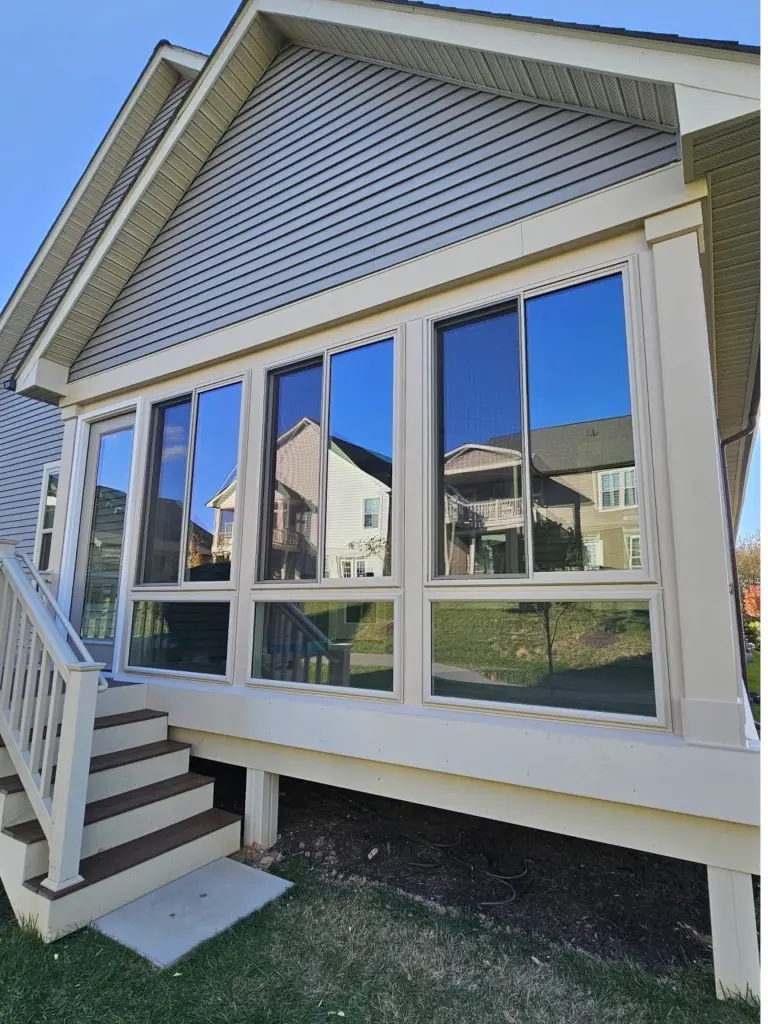
A year-round sunroom can be worth it when you want conditioned living space and are prepared for the cost of insulation, efficient windows, heating and cooling, permits, and maintenance. It is not automatically a strong financial investment. Compare a four-season room with a three-season enclosure or covered porch based on how often you will use it and how much weather control you need.
What Makes a Sunroom Usable Year-Round?
A four-season sunroom is intended to function more like an interior room than an open porch. The complete enclosure matters: roof, walls, floor, windows, doors, air sealing, foundation, and heating and cooling all work together. Adding insulated windows to an otherwise uninsulated room does not make it comfortable through every season.
Because a sunroom usually has more glass than a typical room, compare the ratings for the exact window and door configuration. ENERGY STAR explains that certified windows, doors, and skylights use NFRC-certified U-factor and Solar Heat Gain Coefficient ratings that vary by climate zone. Lower U-factors indicate less heat transfer. SHGC shows how much solar heat passes through the glazing, which can affect both winter warmth and summer overheating.
Three-Season Enclosure or Four-Season Sunroom?
The best choice depends more on intended use than on the name attached to the room:
- A screened enclosure keeps the space open to outdoor air while reducing many flying insects and larger debris. It does not control humidity or temperature.
- A three-season room adds operable windows or panels for more weather protection but is not necessarily designed as conditioned living space.
- A four-season sunroom is planned for heating and cooling, with a more complete thermal and weather-resistant enclosure.
Labels are not a substitute for specifications. Ask what insulation, glazing, air sealing, foundation, and mechanical systems are included, and how the space will be classified by the local jurisdiction.
Plan the Room Around Daily Use
Start with what you want to do in the room. A breakfast area needs a different layout from a home office, plant room, or gathering space. Measure the furniture, allow a clear route between the house and yard, and decide where glare or direct afternoon sun may be uncomfortable.
Also consider privacy, outlets, lighting, window operation, and access for cleaning. These choices are easier to solve on paper than after the structure is built.
Comfort Depends on More Than the Glass
The U.S. Department of Energy recommends comparing the complete window, including the frame, glazing, gas fills, spacers, and coatings. The same whole-system thinking applies to a sunroom. Roof insulation, floor insulation, air leaks, orientation, exterior shading, and HVAC design can matter as much as the window brand.
Ask how roof and wall connections will manage rain, where water will drain, and how the room will be heated, cooled, and ventilated. A room with large areas of glass can feel very different from the rest of the house, so fixed promises about comfort or energy bills should be treated cautiously.
Do Not Assume a Guaranteed Return on Investment
A sunroom may make a home more useful and appealing, but resale results depend on the local market, construction quality, permit history, operating costs, and buyer preferences. If resale value is central to the decision, ask a local appraiser or real-estate professional how comparable homes are treated. Choose the project because the room fits your household and budget, not because someone promises a specific payback.
Check the Site and Permit Requirements Early
Before settling on a design, check the existing deck, slab, or foundation; roof and wall connections; drainage; setbacks; utilities; and homeowners-association rules. Maryland uses statewide building standards, but local jurisdictions administer permits, inspections, and local amendments. The Maryland Building Codes Administration advises homeowners to confirm current requirements with the local jurisdiction.
Permit and design requirements can change with the property's location and with whether the project is treated as a porch enclosure, addition, or conditioned room. The state's county code and permit contact directory is a useful starting point.
Questions to Ask Before Signing a Contract
- Is the proposed room designed for three-season or four-season use?
- What foundation, insulation, windows, doors, roofing, and air sealing are included?
- How will heating, cooling, ventilation, drainage, and electrical work be handled?
- Who is responsible for plans, permits, inspections, and homeowners-association submissions?
- Which product and labor warranties apply, and what maintenance do they require?
Sources and Further Reading
- ENERGY STAR: Residential Windows, Doors, and Skylights
- U.S. Department of Energy: Purchasing Energy-Efficient Residential Windows, Doors, and Skylights
- Maryland Building Codes Administration: Building Codes
- Maryland Building Codes Administration: Local Codes and Contacts
If you are comparing a screened room with a three- or four-season enclosure, Classic Remodeling's enclosure and sunroom page shows the options currently listed on the site.